
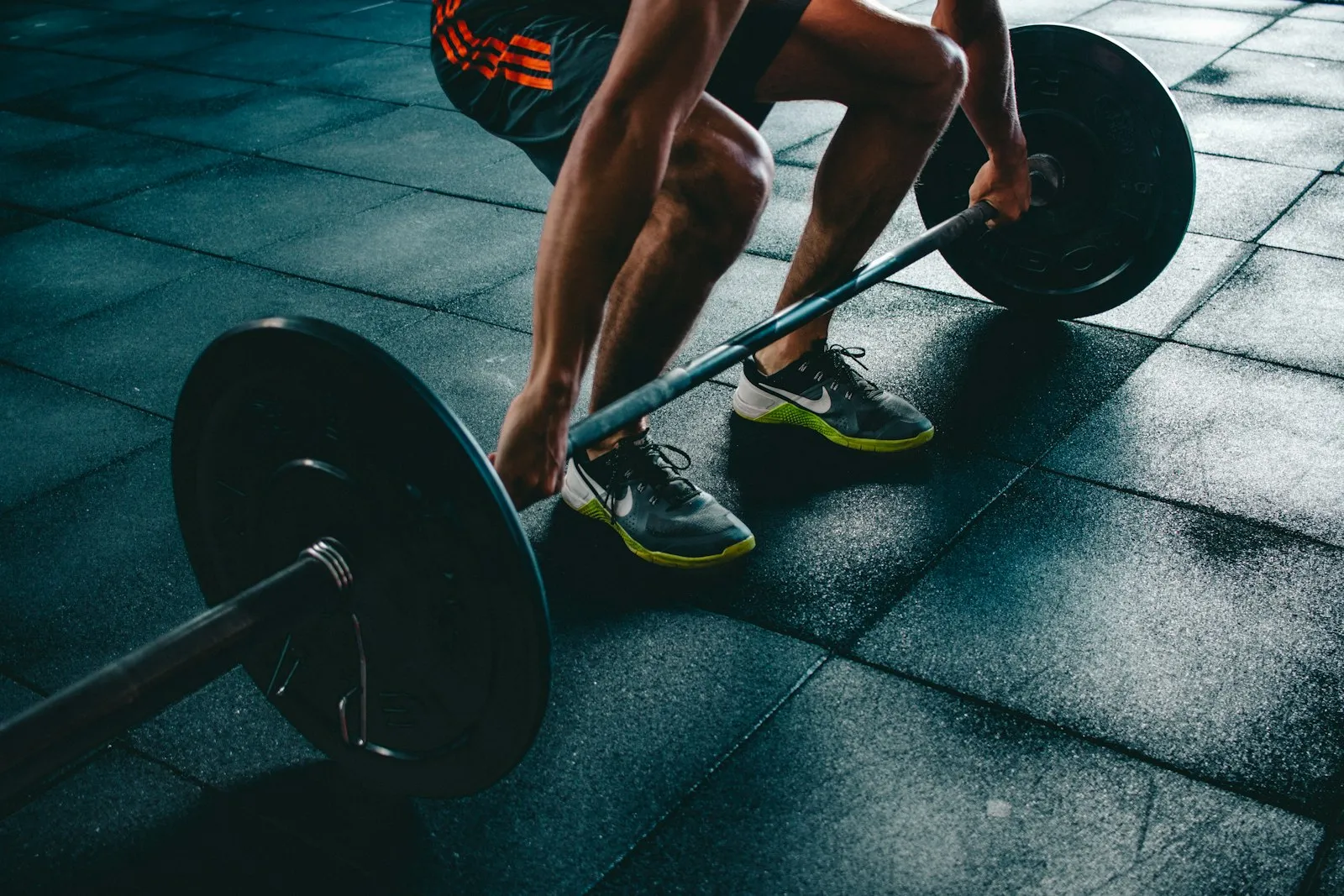
When you are new to training, the gym can feel like it has a thousand machines and no instructions. The truth is that building muscle as a beginner comes down to a small number of highly effective movements, done well and progressed over time. You do not need a complicated programme or a different exercise for every day of the week. You need a few big lifts, a plan to make them harder over time, and the patience to stick with it.
Focus on compound exercises
The best muscle-building exercises are compound movements: they work several muscle groups at once. They build the most muscle, in the least time, while teaching your body to move well. Master these patterns and you have the foundation for everything else.
Isolation exercises like bicep curls have their place, but they are the finishing touches. As a beginner, most of your results will come from getting strong at four basic patterns: squat, hinge, push and pull.
1. Squat
The king of lower-body exercises. Squats build your legs and glutes and carry over to almost everything you do, from carrying groceries to climbing stairs. Beginners often start with a goblet squat (holding a single dumbbell at your chest) or a supported variation before progressing to a barbell. Aim to sit down and back, keep your chest up, and drive through your whole foot.
2. Hinge (deadlift)
A hip hinge, like a deadlift or Romanian deadlift, builds the whole back of your body: hamstrings, glutes and back. Technique matters here, which is exactly why coaching pays off. The movement comes from pushing your hips back, not from bending your spine. Done well it is one of the safest and most productive lifts you can do. Done poorly it is where beginners most often get hurt.
3. Push (press)
Pushing movements, such as a bench press, dumbbell press or push-up, build your chest, shoulders and triceps. If you cannot yet do a full push-up, an incline version with your hands on a bench is a great starting point. Keep your shoulders down and your body in a straight line.
4. Pull (row and pull-down)
Pulling movements, like rows and pull-downs, build your back and biceps and balance out all that pushing, which keeps your shoulders healthy and your posture strong. Most beginners are stronger at pushing than pulling, so it pays to give your back the same attention as your chest.
How to structure sets and reps
Once you know the movements, the next question is how many to do. For building muscle as a beginner, a simple starting point works well:
- Sets: 2 to 4 working sets per exercise.
- Reps: roughly 6 to 12 per set for most lifts.
- Effort: stop each set with one or two solid reps still left in the tank, rather than grinding to complete failure.
- Rest: 1 to 2 minutes between sets, a little longer for the heaviest lifts.
You do not need to count every number to the decimal. The point is enough quality work to challenge the muscle, repeated often enough to add up.
The three rules that actually build muscle
The exercises matter, but so does how you train them:
- Progressive overload. Gradually add weight or reps over time. This is the real driver of muscle growth. The same workout forever gets you nowhere. A practical approach is to add a rep or two each week, and once you hit the top of your rep range with good form, add a little weight and start again.
- Good technique. Proper form means you actually train the target muscle and avoid injury. It is the fastest way to progress, not the slowest. Sloppy reps with heavy weight feel impressive but build less muscle and carry more risk.
- Enough recovery and food. Muscle is built between sessions, with rest and enough protein. Training hard without recovering is spinning your wheels.
How often should a beginner train?
More is not always better. For most beginners, two to four sessions a week is the sweet spot. That is often enough to work each major muscle group roughly twice, which research and practice both suggest is a good target for growth.
Full-body sessions two or three times a week are an efficient way to start, because every workout hits your squat, hinge, push and pull patterns. Leave at least a day between hard sessions for the same muscles so they have time to recover and rebuild. Consistency over months matters far more than any single perfect workout.
Recovery and protein basics
Training is the stimulus, but your body does the actual building while you rest. A few simple habits make a big difference:
- Protein. Spread protein across your meals through the day. Sources like chicken, fish, eggs, tofu, dairy and legumes all work well.
- Sleep. Aim for a consistent seven to nine hours. Poor sleep blunts your progress more than most people realise.
- Rest days. Take them. Feeling a little sore is normal, but constant fatigue is a sign to ease off.
Common beginner mistakes to avoid
A few habits quietly hold new lifters back:
- Program hopping. Changing your routine every week means you never progress on anything. Pick a simple plan and stick with it long enough to improve.
- Chasing soreness. Being sore is not the goal and is not a reliable sign of a good session. Progress is.
- Skipping the basics for machines. The flashy machines are not where the muscle is built. The big compound lifts are.
- Ego lifting. Adding weight faster than your technique can handle leads to sloppy reps and injuries, not faster gains.
Why beginners progress fastest with a coach
Beginners often make the quickest gains of their lives, but only if they build the right habits from the start. A coach teaches the technique properly, sets the right weights, and progresses you safely, so you avoid the months of trial and error most people waste.
Our muscle gain personal training is built to do exactly that.
Start with a trial
The best way to learn these movements is with someone watching every rep. Your first session at Flex Fitness is a no-obligation trial.
Book your trial and build muscle the right way from day one.